
TranzOcean

Why Indian Cashew Processors Are Sourcing More from Guinea-Bissau — And How to Secure Your Supply This Season

Susila L Blog

Walk into any major cashew processing facility in Tuticorin, Cochin, Mangalore, or Visakhapatnam today and ask the procurement team where their raw cashew is coming from. Increasingly, the answer is the same: Guinea-Bissau.

This is not a coincidence. Indian cashew processors are making a deliberate, strategic shift toward Guinea-Bissau as a primary sourcing origin — and the reasons behind that shift are well-grounded in quality, economics, and supply chain reliability. Understanding why this is happening, and more importantly how to act on it before the 2026 season closes, is exactly what this guide covers.

Why Indian Cashew Processors Are Turning to Guinea-Bissau

India’s cashew processing industry is one of the largest in the world. Indian factories process hundreds of thousands of tons of raw cashew annually and export finished kernels to markets across Europe, North America, and the Middle East. But India’s own domestic cashew production — primarily from Kerala, Goa, Karnataka, and Andhra Pradesh — has not kept pace with growing factory capacity.

The shortfall must be made up through imports. And among the available origins, Guinea-Bissau has consistently emerged as one of the most preferred sources for Indian processors. Here is why.

Quality That Indian Processors Can Rely On

Guinea-Bissau raw cashew is widely recognized in the processing trade for its strong outturn rates — the percentage of kernel extracted per ton of raw cashew. High output directly affects a processor’s profitability, since every additional kilogram of kernel recovered from a given quantity of raw cashew adds directly to the margin. Processors who have worked with Guinea-Bissau cashew season after season consistently report outturn performance that justifies the sourcing relationship.

The cashew from Guinea-Bissau also benefits from a short, intense harvest cycle that concentrates quality into a well-defined seasonal window. When handled and shipped correctly — which is where logistics make all the difference — the cashew that arrives at Indian ports carries the quality characteristics processors have contracted for.

Competitive Pricing in a Tight-Margin Industry

Cashew processing operates on margins that leave little room for error. Raw cashew pricing from Guinea-Bissau has consistently offered Indian processors a competitive cost base compared to some alternative origins, particularly when volume, quality grade, and logistics efficiency are taken together. In a business where a small difference in input cost multiplies across thousands of tons, origin pricing matters enormously.

Volume Availability at Scale

Guinea-Bissau exports close to 300,000 tons of raw cashew annually — a volume that gives Indian processors meaningful sourcing flexibility. Large-scale operations in Tuticorin and Cochin in particular need origins that can supply consistent volume across a full processing season, not just occasional parcels. Guinea-Bissau delivers that scale reliably, year after year.

The Challenge: Getting Guinea-Bissau Cashew to India on Time

Understanding why Indian processors source from Guinea-Bissau is only half the picture. The other half — the half that determines whether a sourcing decision actually translates into a profitable season — is logistics.

Guinea-Bissau’s Port of Bissau operates as a river port with significant physical constraints. Draft restrictions mean that large mainline vessels cannot call directly. Tidal dependency adds operational complexity to every berthing and loading window. And during the peak export season — when the entire country’s cashew crop is competing for limited port capacity over just three to four months — berth availability becomes extremely tight.

For Indian processors, these constraints translate directly into risk. A vessel that cannot call at Bissau on schedule, or cargo that cannot be loaded within the tidal window, means delays that cascade through the entire supply chain. Raw cashew sitting in a warehouse waiting for a vessel loses quality with every passing day. Storage costs accumulate. And if the delay pushes shipment past the early season window, the cargo may arrive at Indian ports after the optimal processing period has already passed.

This is why the logistics partner an Indian processor chooses for Guinea-Bissau sourcing is not a secondary decision — it is as important as the sourcing decision itself.

How Indian Processors Are Securing Their Guinea-Bissau Supply

The most effective approach Indian cashew processors are using to secure their Guinea-Bissau supply can be broken into three clear steps.

Step 1 — Book Early, Before the Season Opens

The single most impactful thing an Indian processor can do is confirm vessel space before the peak season rush begins. This sounds obvious, but in practice many procurement teams delay booking until cargo is physically ready — by which point the best vessel slots are already spoken for.

Booking early with a dedicated, scheduled shipping service means the vessel arrival at Bissau, the loading window, and the estimated arrival at the Indian destination port are all known in advance. This allows production planning, buyer commitments, and import logistics to be organised around a real schedule rather than an uncertain one.

Step 2 — Choose a Dedicated Vessel, Not a Spot Booking

Spot bookings on general cargo vessels are the most common source of delay for Indian processors sourcing from Guinea-Bissau. A spot booking depends on vessel availability at the exact moment cargo is ready — which during peak season, when demand for vessel space far exceeds supply, is never guaranteed.

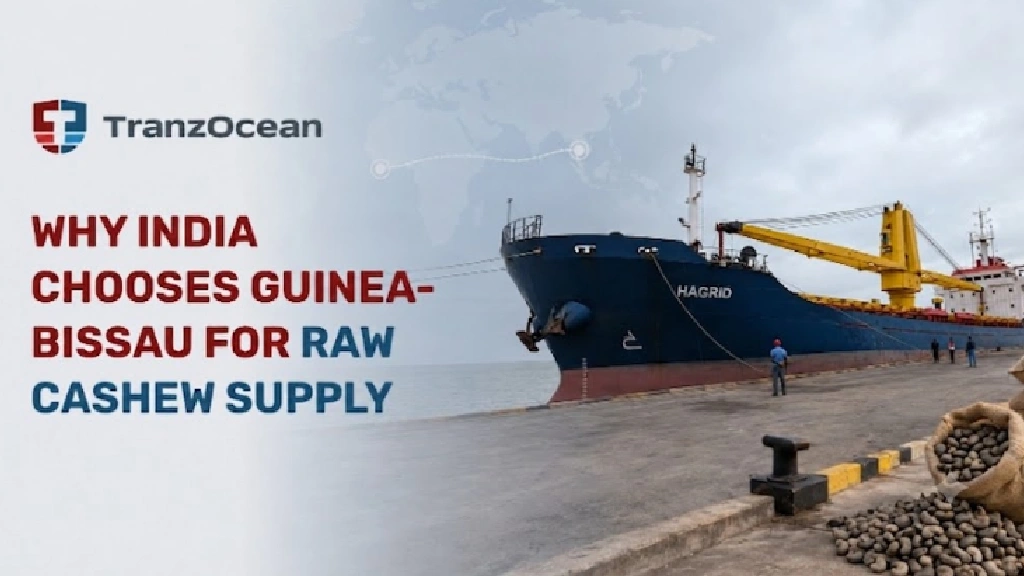
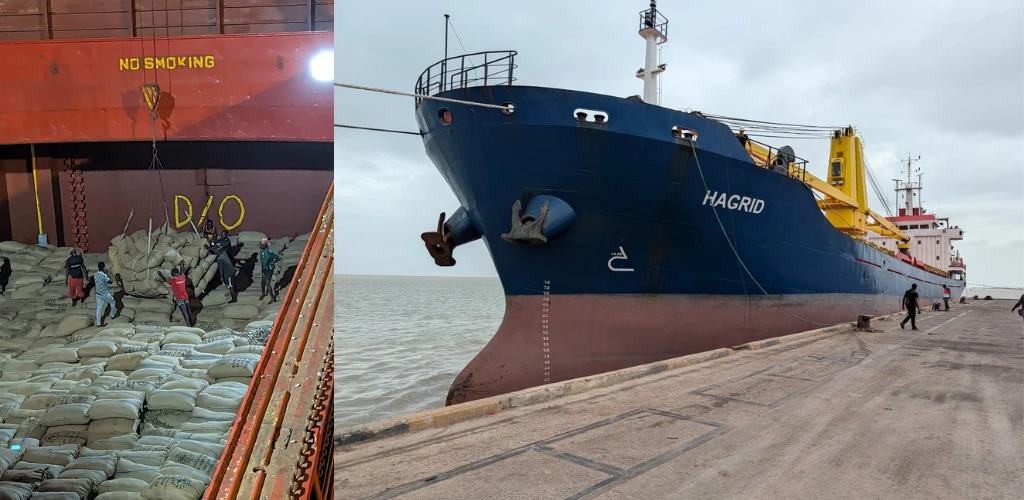
A dedicated, scheduled vessel service operates on a fixed calendar. TranzOcean Line MV. Hagrid operates confirmed voyages from Guinea-Bissau to Dakar, with onward connections via Hapag Lloyd to Tuticorin, Cochin, Mangalore, and Visakhapatnam. Each voyage has a fixed ETA at Bissau and a fixed ETD from Dakar — giving Indian processors the planning certainty that spot bookings simply cannot provide.

Step 3 — Select the Right Cargo Service for Your Operation

Not every Indian processor moves cashew in the same way, and the right shipping method depends on volume, warehouse setup, and documentation requirements.

TranzOcean Line offers two options designed for Guinea-Bissau cashew sourcing. The Full Container Service seals cargo at origin — at the exporter’s warehouse or at Bissau Port — and delivers it to the Indian destination port under the same seal, protecting quality and simplifying customs clearance documentation. The Bulk-to-Container Transshipment Service moves bagged cashew in bulk from Bissau to Dakar, where it is professionally stuffed into containers for mainline delivery to India — well suited to higher-volume operations during peak season.
Why Indian Processors Choose TranzOcean Line for Guinea-Bissau Sourcing

Indian cashew processors who move their Guinea-Bissau supply through TranzOcean Line gain something that goes beyond a vessel schedule: a logistics partner who understands both ends of the trade.

TranzOcean Line operations are built around the specific realities of the Bissau corridor — the tidal windows, the documentation requirements, the feeder connection to Dakar, and the onward mainline timing to Indian ports. Clean documentation means faster customs clearance at Tuticorin, Cochin, Mangalore, and Visakhapatnam. Sealed containers mean less quality dispute risk at destination. And a fixed schedule means Indian factory floors can plan their production runs around a vessel that actually arrives when it is supposed to.

Act Now — The 2026 Season Is Already Open

Guinea-Bissau cashew sourcing for Indian processors has never been stronger, and the logistics infrastructure to support it has never been more dependable. But the season window is short, vessel space is finite, and the processors who book early are the ones who ship on time.

If your operation sources raw cashew from Guinea-Bissau — or is considering it for the first time this season — now is the moment to confirm your shipping arrangement.

If your business is still depending on the uncertainty of spot bookings, now is the moment to consider a different approach. Reach out to the TranzOcean Line team to discuss your volume, your preferred destination, and the service model that fits your cashew cargo best.

Contact TranzOcean:

Email: cs@tranzocean.com
Phone: +245-957-995-262
Phone: +971-426-525-62
WhatsApp: +971-54-533-5545
 

Walk into any major cashew processing facility in Tuticorin, Cochin, Mangalore, or Visakhapatnam today and ask the procurement team where their raw cashew is coming from. Increasingly, the answer is the same: Guinea-Bissau.

This is not a coincidence. Indian cashew processors are making a deliberate, strategic shift toward Guinea-Bissau as a primary sourcing origin — and the reasons behind that shift are well-grounded in quality, economics, and supply chain reliability. Understanding why this is happening, and more importantly how to act on it before the 2026 season closes, is exactly what this guide covers.

Why Indian Cashew Processors Are Turning to Guinea-Bissau

India’s cashew processing industry is one of the largest in the world. Indian factories process hundreds of thousands of tons of raw cashew annually and export finished kernels to markets across Europe, North America, and the Middle East. But India’s own domestic cashew production — primarily from Kerala, Goa, Karnataka, and Andhra Pradesh — has not kept pace with growing factory capacity.

The shortfall must be made up through imports. And among the available origins, Guinea-Bissau has consistently emerged as one of the most preferred sources for Indian processors. Here is why.

Quality That Indian Processors Can Rely On

Guinea-Bissau raw cashew is widely recognized in the processing trade for its strong outturn rates — the percentage of kernel extracted per ton of raw cashew. High output directly affects a processor’s profitability, since every additional kilogram of kernel recovered from a given quantity of raw cashew adds directly to the margin. Processors who have worked with Guinea-Bissau cashew season after season consistently report outturn performance that justifies the sourcing relationship.

The cashew from Guinea-Bissau also benefits from a short, intense harvest cycle that concentrates quality into a well-defined seasonal window. When handled and shipped correctly — which is where logistics make all the difference — the cashew that arrives at Indian ports carries the quality characteristics processors have contracted for.

Competitive Pricing in a Tight-Margin Industry

Cashew processing operates on margins that leave little room for error. Raw cashew pricing from Guinea-Bissau has consistently offered Indian processors a competitive cost base compared to some alternative origins, particularly when volume, quality grade, and logistics efficiency are taken together. In a business where a small difference in input cost multiplies across thousands of tons, origin pricing matters enormously.

Volume Availability at Scale

Guinea-Bissau exports close to 300,000 tons of raw cashew annually — a volume that gives Indian processors meaningful sourcing flexibility. Large-scale operations in Tuticorin and Cochin in particular need origins that can supply consistent volume across a full processing season, not just occasional parcels. Guinea-Bissau delivers that scale reliably, year after year.

The Challenge: Getting Guinea-Bissau Cashew to India on Time

Understanding why Indian processors source from Guinea-Bissau is only half the picture. The other half — the half that determines whether a sourcing decision actually translates into a profitable season — is logistics.

Guinea-Bissau’s Port of Bissau operates as a river port with significant physical constraints. Draft restrictions mean that large mainline vessels cannot call directly. Tidal dependency adds operational complexity to every berthing and loading window. And during the peak export season — when the entire country’s cashew crop is competing for limited port capacity over just three to four months — berth availability becomes extremely tight.

For Indian processors, these constraints translate directly into risk. A vessel that cannot call at Bissau on schedule, or cargo that cannot be loaded within the tidal window, means delays that cascade through the entire supply chain. Raw cashew sitting in a warehouse waiting for a vessel loses quality with every passing day. Storage costs accumulate. And if the delay pushes shipment past the early season window, the cargo may arrive at Indian ports after the optimal processing period has already passed.

This is why the logistics partner an Indian processor chooses for Guinea-Bissau sourcing is not a secondary decision — it is as important as the sourcing decision itself.

How Indian Processors Are Securing Their Guinea-Bissau Supply

The most effective approach Indian cashew processors are using to secure their Guinea-Bissau supply can be broken into three clear steps.

Step 1 — Book Early, Before the Season Opens

The single most impactful thing an Indian processor can do is confirm vessel space before the peak season rush begins. This sounds obvious, but in practice many procurement teams delay booking until cargo is physically ready — by which point the best vessel slots are already spoken for.

Booking early with a dedicated, scheduled shipping service means the vessel arrival at Bissau, the loading window, and the estimated arrival at the Indian destination port are all known in advance. This allows production planning, buyer commitments, and import logistics to be organised around a real schedule rather than an uncertain one.

Step 2 — Choose a Dedicated Vessel, Not a Spot Booking

Spot bookings on general cargo vessels are the most common source of delay for Indian processors sourcing from Guinea-Bissau. A spot booking depends on vessel availability at the exact moment cargo is ready — which during peak season, when demand for vessel space far exceeds supply, is never guaranteed.

A dedicated, scheduled vessel service operates on a fixed calendar. TranzOcean Line MV. Hagrid operates confirmed voyages from Guinea-Bissau to Dakar, with onward connections via Hapag Lloyd to Tuticorin, Cochin, Mangalore, and Visakhapatnam. Each voyage has a fixed ETA at Bissau and a fixed ETD from Dakar — giving Indian processors the planning certainty that spot bookings simply cannot provide.

Step 3 — Select the Right Cargo Service for Your Operation

Not every Indian processor moves cashew in the same way, and the right shipping method depends on volume, warehouse setup, and documentation requirements.

TranzOcean Line offers two options designed for Guinea-Bissau cashew sourcing. The Full Container Service seals cargo at origin — at the exporter’s warehouse or at Bissau Port — and delivers it to the Indian destination port under the same seal, protecting quality and simplifying customs clearance documentation. The Bulk-to-Container Transshipment Service moves bagged cashew in bulk from Bissau to Dakar, where it is professionally stuffed into containers for mainline delivery to India — well suited to higher-volume operations during peak season.

Why Indian Processors Choose TranzOcean Line for Guinea-Bissau Sourcing

Indian cashew processors who move their Guinea-Bissau supply through TranzOcean Line gain something that goes beyond a vessel schedule: a logistics partner who understands both ends of the trade.

TranzOcean Line operations are built around the specific realities of the Bissau corridor — the tidal windows, the documentation requirements, the feeder connection to Dakar, and the onward mainline timing to Indian ports. Clean documentation means faster customs clearance at Tuticorin, Cochin, Mangalore, and Visakhapatnam. Sealed containers mean less quality dispute risk at destination. And a fixed schedule means Indian factory floors can plan their production runs around a vessel that actually arrives when it is supposed to.

Act Now — The 2026 Season Is Already Open

Guinea-Bissau cashew sourcing for Indian processors has never been stronger, and the logistics infrastructure to support it has never been more dependable. But the season window is short, vessel space is finite, and the processors who book early are the ones who ship on time.

If your operation sources raw cashew from Guinea-Bissau — or is considering it for the first time this season — now is the moment to confirm your shipping arrangement.

If your business is still depending on the uncertainty of spot bookings, now is the moment to consider a different approach. Reach out to the TranzOcean Line team to discuss your volume, your preferred destination, and the service model that fits your cashew cargo best.

Contact TranzOcean:

Email: cs@tranzocean.com
Phone: +245-957-995-262
Phone: +971-426-525-62
WhatsApp: +971-54-533-5545
 

Leave a Reply

Your email address will not be published. Required fields are marked *