
TranzOcean

Your Cashew Cargo Deserves a Vessel That Won’t Let You Down — Here’s Why Exporters Are Switching to TranzOcean

Susila L Blog

Every cashew exporter in Guinea-Bissau knows the feeling: cargo is ready, buyers are waiting, and the only thing standing between a profitable season and a missed opportunity is a reliable vessel. For years, that reliability has been the hardest part of the cashew export business to control. Spot bookings fall through. Vessel space disappears overnight. Schedules shift without warning. And in a trade where the entire season lasts just three to four months, even a short delay can mean the difference between a strong harvest year and a costly one.

This is exactly why a growing number of cashew exporters are rethinking how they move their cashew cargo — and why so many are making the switch to TranzOcean Line.

The Real Cost of an Unreliable Vessel

When a cashew cargo shipment is delayed, the damage rarely stops at a missed sailing date. Raw cashew is a perishable, time- sensitive commodity. Every extra week spent waiting in a warehouse for vessel space increases the risk of moisture exposure, quality deterioration, and ultimately, a lower price at destination. Add to that the storage costs that accumulate while cargo sits idle, and the picture becomes clear: an unreliable vessel does not just cost time, it costs money directly off the bottom line.

For exporters relying on the spot market, this risk is built into the system itself. Spot bookings depend on whichever vessel happens to have space available at the exact moment cargo is ready — not on a schedule built around the cashew season. That mismatch is precisely where so many shipments go wrong, and it is the single biggest reason exporters are now searching for a more dependable way to move their cashew cargo.

Why More Cashew Exporters Are Making the Switch

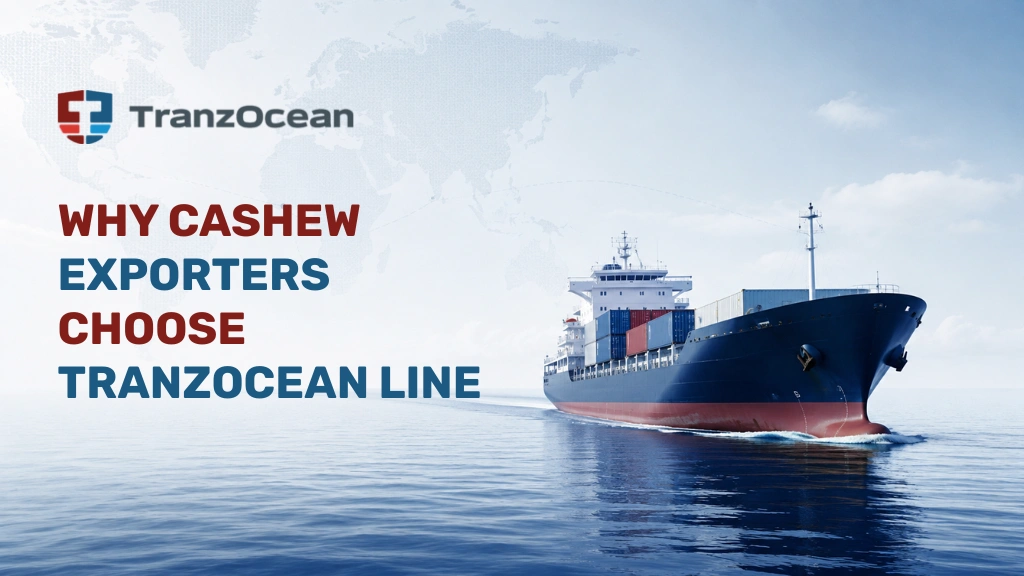
TranzOcean Line was formed to solve this exact problem. Rather than offering ad hoc cashew cargo space whenever it happens to be available, TranzOcean Line  operates a dedicated vessel — MV. Hagrid — on a fixed seasonal schedule between Guinea-Bissau and the major cashew processing ports of India and Vietnam.

That single difference changes everything for an exporter. Instead of waiting anxiously for a spot booking to materialise, exporters can plan their harvest, their warehouse stuffing, and their buyer commitments around a confirmed sailing date they know well in advance. The vessel is not a maybe — it is a commitment.

This is the core reason exporters describe when explaining why they switched to TranzOcean Line: predictability. In a trade defined by a short, intense export window, predictability is not a luxury. It is the difference between a season that runs smoothly and one that runs into crisis.

What a Dependable Cashew Cargo Partner Actually Looks Like

Reliability is more than just a fixed sailing schedule. A genuinely dependable cashew cargo partner has to manage the entire journey with the same level of care an exporter would expect from their own operation.

TranzOcean Line gives exporters a choice between two carefully designed service models, so cargo can move in whichever way best suits their operation. The Full Container Service allows cashew cargo to be sealed at origin — either at the exporter’s own warehouse or at the port — and to travel under that same seal all the way to destination, protecting quality and simplifying documentation along the way. The Bulk-to-Container Transshipment Service, on the other hand, allows exporters who move bagged cargo to ship in bulk to a nearby transshipment hub, where it is professionally stuffed into containers for onward delivery — a model well suited to higher volumes during the peak of the season.

Having both options available under a single shipping partner means exporters are never forced to change their operational model just to fit a shipping company’s limitations. Instead, the shipping partner adapts to the way the cashew trade actually works.

The TranzOcean Line Difference : Built Around the Cashew Trade

What separates TranzOcean Line from a generic freight forwarder is depth of focus. The team has built its operations specifically around the realities of moving cashew cargo out of Guinea-Bissau — a market with genuine operational complexity, from the Port of Bissau’s tidal and draft restrictions to the short, high-pressure export window that defines the entire season.

That focus shows up in the details that matter most. Container positioning is planned well ahead of the season opening. Documentation is handled with the accuracy that customs clearance in India and Vietnam demands. And the feeder connection through Dakar is structured to minimise the time cashew cargo spends in transit, protecting both quality and cost along the way.

Exporters who switch to TranzOcean Line are not simply buying vessel space — they are buying the experience of a team that has already solved the operational problems specific to this trade, season after season, so exporters do not have to solve them alone.

Switching Vessels Doesn't Have to Mean Switching Risk

One of the biggest hesitations exporters have about changing shipping partners is the fear of disruption. Will documentation processes change? Will the new partner understand existing buyer commitments? Will there be a learning curve that costs time the business simply cannot afford to lose during peak season?

TranzOcean Line onboarding process is designed specifically to remove that friction. From the very first conversation, the team works directly with exporters to understand current volumes, existing buyer destinations, and preferred service models — building a shipping plan around the exporter’s business, rather than asking the exporter to adapt to a generic template. For most clients, switching their cashew cargo to a dedicated, scheduled vessel feels less like a disruption and more like finally removing a recurring source of stress from their operation.

Who Is Already Making the Switch

The exporters moving their cashew cargo to TranzOcean Line are not all the same size or shape. Some are established exporters with decades of relationships in Tuticorin and Cochin, looking to remove the one unpredictable variable left in an otherwise well-run operation. Others are newer entrants to the trade, building their reputation with Vietnamese buyers and unwilling to risk that reputation on a missed sailing date.

What they share is a recognition that vessel reliability is not something to leave to chance. Whether an exporter ships a few hundred tons or several thousand tons across a season, the underlying problem is identical: a delayed cashew cargo shipment puts quality, cost, and buyer trust at risk in equal measure. A dedicated, scheduled vessel removes that variable regardless of volume, which is exactly why exporters across the spectrum are choosing to make the move.

Make the Switch Before the Season Closes

The 2026 cashew season will not wait, and neither will vessel space on a dedicated, scheduled service. Exporters who have already switched to TranzOcean Line are moving their cashew cargo with confidence — knowing it will arrive on time, in the condition their buyers expect, season after season. If your business is still depending on the uncertainty of spot bookings, now is the moment to consider a different approach. Reach out to the TranzOcean Line team to discuss your volume, your preferred destination, and the service model that fits your cashew cargo best.
Contact TranzOcean:
Email: cs@tranzocean.com
Phone: +245-957-995-262
Phone: +971-426-525-62
WhatsApp: +971-54-533-5545  

Every cashew exporter in Guinea-Bissau knows the feeling: cargo is ready, buyers are waiting, and the only thing standing between a profitable season and a missed opportunity is a reliable vessel. For years, that reliability has been the hardest part of the cashew export business to control. Spot bookings fall through. Vessel space disappears overnight. Schedules shift without warning. And in a trade where the entire season lasts just three to four months, even a short delay can mean the difference between a strong harvest year and a costly one.

This is exactly why a growing number of cashew exporters are rethinking how they move their cashew cargo — and why so many are making the switch to TranzOcean Line.

The Real Cost of an Unreliable Vessel

When a cashew cargo shipment is delayed, the damage rarely stops at a missed sailing date. Raw cashew is a perishable, time- sensitive commodity. Every extra week spent waiting in a warehouse for vessel space increases the risk of moisture exposure, quality deterioration, and ultimately, a lower price at destination. Add to that the storage costs that accumulate while cargo sits idle, and the picture becomes clear: an unreliable vessel does not just cost time, it costs money directly off the bottom line.

For exporters relying on the spot market, this risk is built into the system itself. Spot bookings depend on whichever vessel happens to have space available at the exact moment cargo is ready — not on a schedule built around the cashew season. That mismatch is precisely where so many shipments go wrong, and it is the single biggest reason exporters are now searching for a more dependable way to move their cashew cargo.

Why More Cashew Exporters Are Making the Switch

TranzOcean Line was formed to solve this exact problem. Rather than offering ad hoc cashew cargo space whenever it happens to be available, TranzOcean Line  operates a dedicated vessel — MV. Hagrid — on a fixed seasonal schedule between Guinea-Bissau and the major cashew processing ports of India and Vietnam.

That single difference changes everything for an exporter. Instead of waiting anxiously for a spot booking to materialise, exporters can plan their harvest, their warehouse stuffing, and their buyer commitments around a confirmed sailing date they know well in advance. The vessel is not a maybe — it is a commitment.

This is the core reason exporters describe when explaining why they switched to TranzOcean Line: predictability. In a trade defined by a short, intense export window, predictability is not a luxury. It is the difference between a season that runs smoothly and one that runs into crisis.

What a Dependable Cashew Cargo Partner Actually Looks Like

Reliability is more than just a fixed sailing schedule. A genuinely dependable cashew cargo partner has to manage the entire journey with the same level of care an exporter would expect from their own operation.

TranzOcean Line gives exporters a choice between two carefully designed service models, so cargo can move in whichever way best suits their operation. The Full Container Service allows cashew cargo to be sealed at origin — either at the exporter’s own warehouse or at the port — and to travel under that same seal all the way to destination, protecting quality and simplifying documentation along the way. The Bulk-to-Container Transshipment Service, on the other hand, allows exporters who move bagged cargo to ship in bulk to a nearby transshipment hub, where it is professionally stuffed into containers for onward delivery — a model well suited to higher volumes during the peak of the season.

Having both options available under a single shipping partner means exporters are never forced to change their operational model just to fit a shipping company’s limitations. Instead, the shipping partner adapts to the way the cashew trade actually works.

The TranzOcean Line Difference : Built Around the Cashew Trade

What separates TranzOcean Line from a generic freight forwarder is depth of focus. The team has built its operations specifically around the realities of moving cashew cargo out of Guinea-Bissau — a market with genuine operational complexity, from the Port of Bissau’s tidal and draft restrictions to the short, high-pressure export window that defines the entire season.

That focus shows up in the details that matter most. Container positioning is planned well ahead of the season opening. Documentation is handled with the accuracy that customs clearance in India and Vietnam demands. And the feeder connection through Dakar is structured to minimise the time cashew cargo spends in transit, protecting both quality and cost along the way.

Exporters who switch to TranzOcean Line are not simply buying vessel space — they are buying the experience of a team that has already solved the operational problems specific to this trade, season after season, so exporters do not have to solve them alone.

Switching Vessels Doesn't Have to Mean Switching Risk

One of the biggest hesitations exporters have about changing shipping partners is the fear of disruption. Will documentation processes change? Will the new partner understand existing buyer commitments? Will there be a learning curve that costs time the business simply cannot afford to lose during peak season?

TranzOcean Line onboarding process is designed specifically to remove that friction. From the very first conversation, the team works directly with exporters to understand current volumes, existing buyer destinations, and preferred service models — building a shipping plan around the exporter’s business, rather than asking the exporter to adapt to a generic template. For most clients, switching their cashew cargo to a dedicated, scheduled vessel feels less like a disruption and more like finally removing a recurring source of stress from their operation.

Who Is Already Making the Switch

The exporters moving their cashew cargo to TranzOcean Line are not all the same size or shape. Some are established exporters with decades of relationships in Tuticorin and Cochin, looking to remove the one unpredictable variable left in an otherwise well-run operation. Others are newer entrants to the trade, building their reputation with Vietnamese buyers and unwilling to risk that reputation on a missed sailing date.

What they share is a recognition that vessel reliability is not something to leave to chance. Whether an exporter ships a few hundred tons or several thousand tons across a season, the underlying problem is identical: a delayed cashew cargo shipment puts quality, cost, and buyer trust at risk in equal measure. A dedicated, scheduled vessel removes that variable regardless of volume, which is exactly why exporters across the spectrum are choosing to make the move.

Make the Switch Before the Season Closes

The 2026 cashew season will not wait, and neither will vessel space on a dedicated, scheduled service. Exporters who have already switched to TranzOcean Line are moving their cashew cargo with confidence — knowing it will arrive on time, in the condition their buyers expect, season after season. If your business is still depending on the uncertainty of spot bookings, now is the moment to consider a different approach. Reach out to the TranzOcean Line team to discuss your volume, your preferred destination, and the service model that fits your cashew cargo best.
Contact TranzOcean:
Email: cs@tranzocean.com
Phone: +245-957-995-262
Phone: +971-426-525-62
WhatsApp: +971-54-533-5545  

Leave a Reply

Your email address will not be published. Required fields are marked *